Commercial eel fishery
Commercial fishery
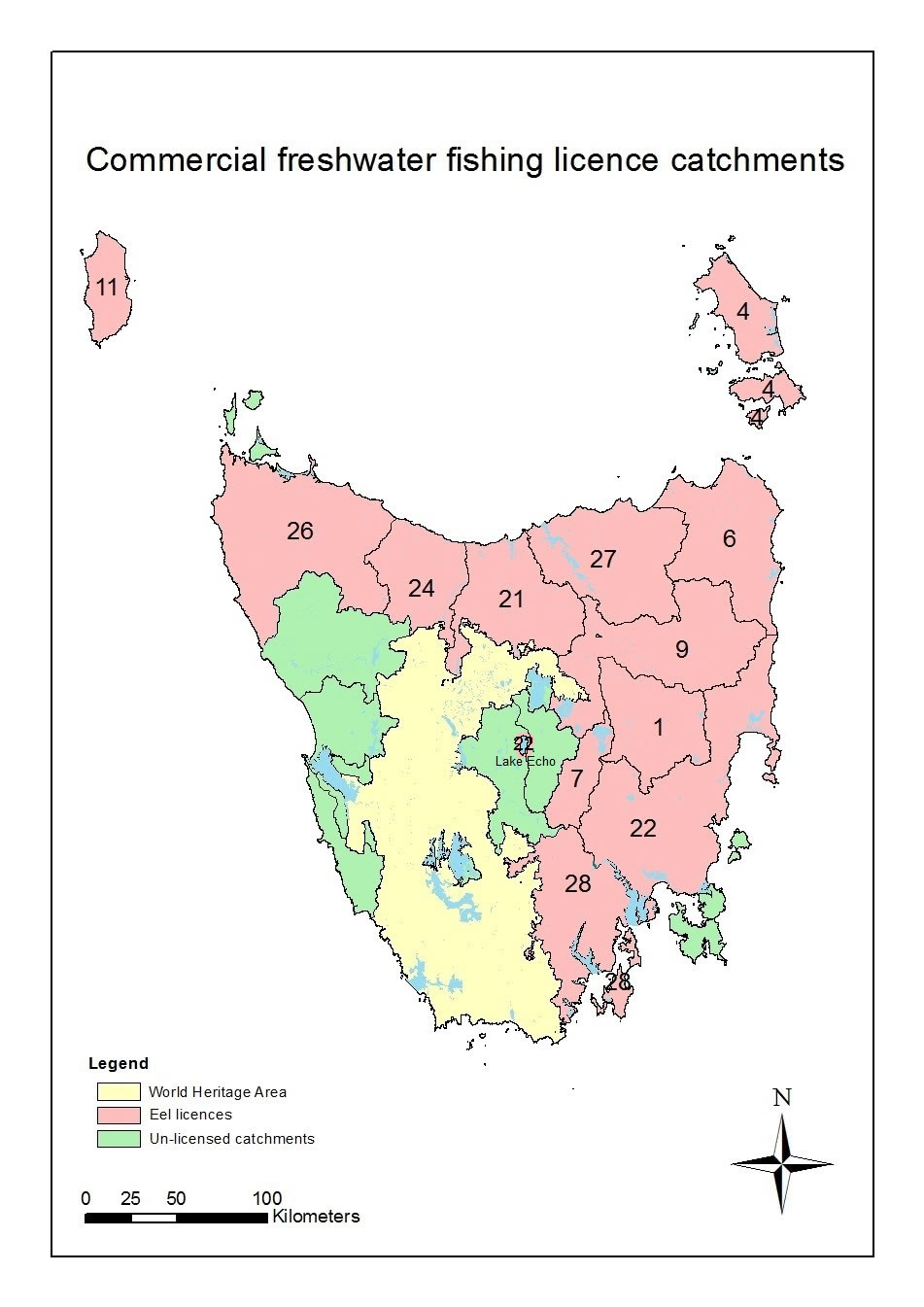
There are 12 commercial eel fishing licences in operation across Tasmania, delineated on a catchment basis. Many catchments in Tasmania are not commercially fished at all, ensuring the ongoing sustainability of the fishery.
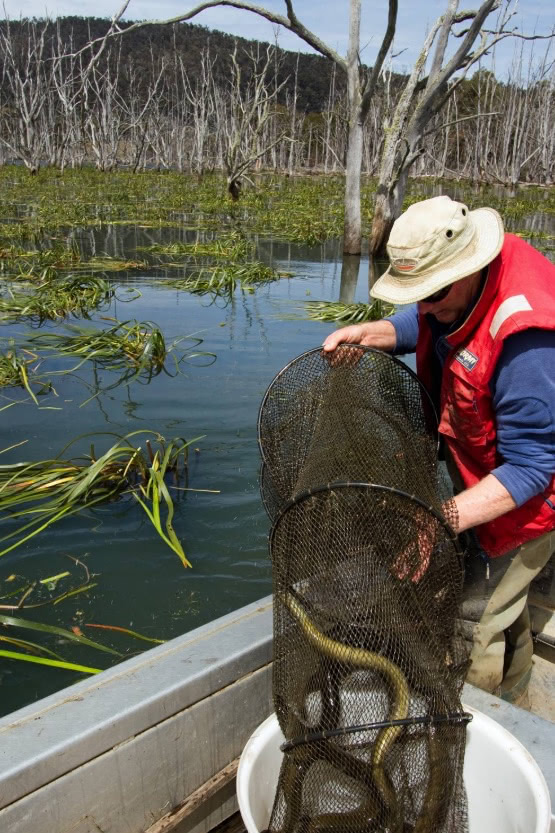
Fyke nets are used to take short and longfin eels, and nets are generally set in the shallow weedy margins of lakes. Fyke nets are a long cylindrical net featuring a net leader that extends from the opening and are often set in long strings of several nets. When the eels swim into the net leader, they turn and travel along it into an opening in the fyke net where they become trapped inside.
Please take care around commercial fishing equipment. It is an offence to interfere with commercial fishing equipment. There are strict rules and regulations around the commercial eel fishery and operations are routinely inspected by the Inland Fisheries Service.
Commercially caught freshwater eels in Tasmania are sold both within Australia and are exported internationally.
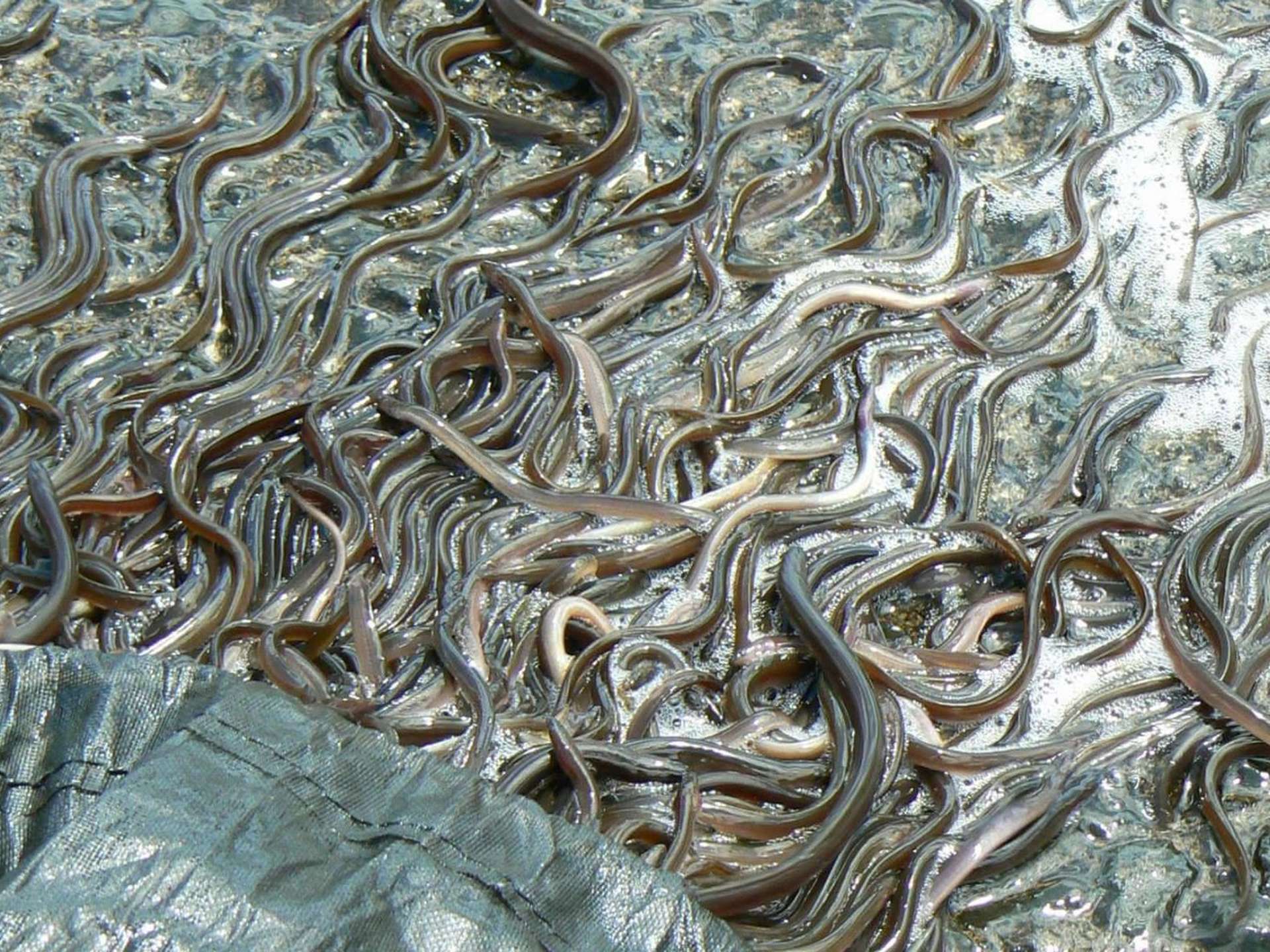
Shortfin and longfin eels are remarkable animals. Spawning occurs annually in deep waters in or near the Coral Sea, thousands of kilometres north of Tasmania. Adults die after spawning and larval eels are then swept back to Tasmania on the East Australian Current. It is not until they reach the coastal waters of Tasmania that they develop into ‘elvers’ and commence their migrations up the state's river systems.
Eels live in Tasmanian freshwaters for up to 30 years and are a key part of Tasmanian freshwater ecosystems. Once ready to spawn, the eels develop a silver belly and migrate back to their birthplace in the Coral Sea to spawn. Longfin eels have been known to grow to up to 20 kg and reach over 3 metres in length!
Key trout fishing waters that are regularly fished by commercial eel fishermen in Tasmania include:
- Blackmans Lagoon
- Brushy Lagoon
- Craigbourne Lake
- Four Springs Lake
- Huon River
- Lake Dulverton
- Lake Echo
- Lake Lea
- Lake Leake
- Lake Mikany
- Lake Trevallyn
- Tooms Lake
- Talbots Lagoon
- Woods Lake
Elver harvesting and restock
Each year (from around October to February) the IFS harvests juvenile eels, known as elvers, from two locations in the State – the Trevallyn Tailrace and Lake Meadowbank Dam. The elvers are re-located and released above the dam walls into various rivers which helps to overcome the barriers to eel migration presented by large dams used for hydro electricity storage. The elver harvest and re-location activity is a joint effort between the IFS and Hydro Tasmania.
Eels are an integral part of the native fish fauna of Tasmania and it is important to allow as close to natural quantities of them to inhabit our waterways for biodiversity reasons. Eels play an important role in the freshwater ecosystems and without them a naturally balanced aquatic system would not be easily achieved.