
Preserving Tasmania's Freshwater Fish History for Future Research
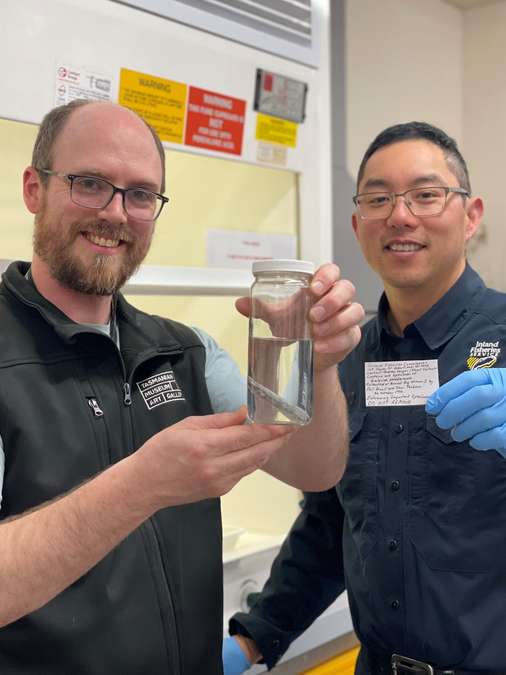
A collaborative effort between the Inland Fisheries Service (IFS), the Tasmanian Museum and Art Gallery (TMAG) Collections and Research Facility, and CSIRO, Australia's national science agency, is helping preserve valuable fish specimens while creating new opportunities for biodiversity research, conservation and education.
Over the past 20 years, IFS has collected and maintained a wide range of fish specimens through its fisheries research and management programs. Numerous current and historical specimens have recently been donated to TMAG, ensuring they are permanently housed within Tasmania's State Collection and available for future scientific study.
The work was coordinated in partnership with Dr David Hocking (Senior Curator of Vertebrate Zoology and Palaeontology at TMAG) who oversees collections that span more than 150 years of zoological acquisitions. These collections play a vital role in advancing our understanding of the State's biodiversity and support research into species distributions, ecology, genetics, evolution, and responses to environmental change.
The project also provided a unique opportunity for CSIRO's National Biodiversity DNA Library (NBDL). Dr Nerida Wilson (Scientific Campaign Coordinator for the NBDL) joined specimen processing activities to collect tissue samples from some of the specimens. These samples will contribute to the growing NBDL portal (nbdl.csiro.au), where scientists rapidly and accurately identify species using environmental DNA (eDNA), thus improving biodiversity monitoring across Australia.
Among the specimens sampled were two of Tasmania's most significant freshwater fish records. The first was a historical Estuary Perch (Percalates colonorum) collected from the Ansons River in the 1960s. This specimen represents the last confirmed physical record of the species from that waterway, with Estuary Perch now restricted in Tasmania to the Arthur River on the north-west coast. If DNA can be successfully recovered from the formalin-fixed specimen, it may provide valuable insights into the historical genetic diversity and structure of a population that has since disappeared.
The second significant specimen was a Pedder Galaxias (Galaxias pedderensis) collected from Lake Pedder in 1994. This specimen represents the last known physical record of the species from its natural range, with the species being listed as ‘extinct in the wild’ under Australian Government legislation since 2005. Genetic material obtained from this specimen may support future research into the history, conservation and recovery of this species by providing a unique snapshot of the original Lake Pedder population before it disappeared.
Beyond their scientific value, some of the specimens transferred to TMAG may also be used for public displays, educational program, and future exhibitions, helping to showcase Tasmania's unique freshwater fish fauna and raise awareness of the importance of conserving our aquatic biodiversity.
By combining historical collections, contemporary specimens, and modern genetic technologies, this collaborative project is ensuring Tasmania's aquatic biodiversity is preserved, not only in museum collections, but also within Australia's growing National Biodiversity DNA Library. The initiative will support future research, strengthen biodiversity monitoring, and help tell the story of Tasmania's remarkable freshwater fish for generations to come.
