
Learning in the River: Bothwell District High School Students Discover the River Clyde Ecosystem
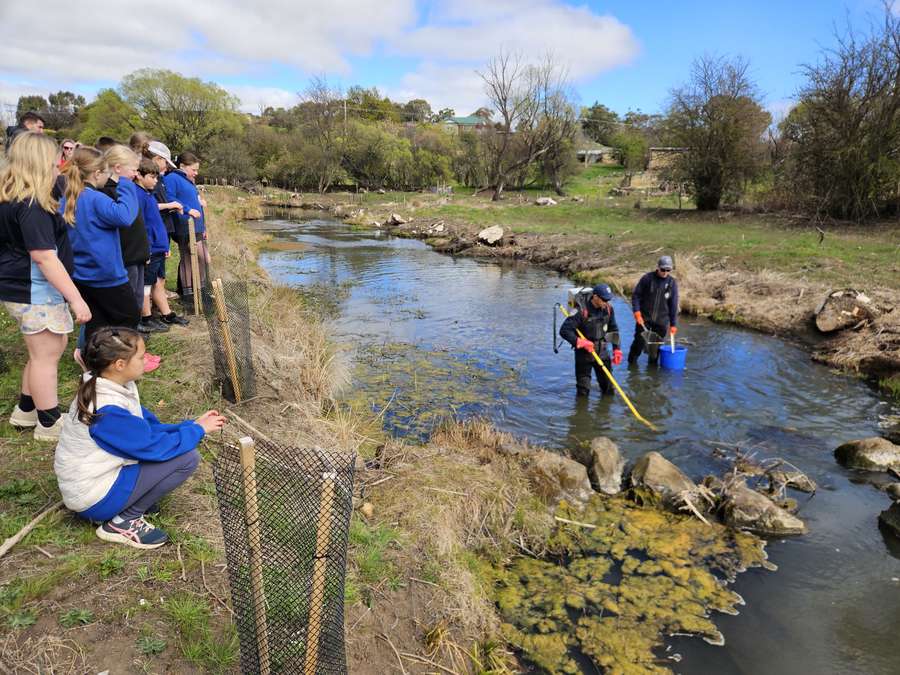
Recently, Inland Fisheries Service staff visited the River Clyde at Croakers Alley Riverside Reserve in Bothwell to deliver a backpack electrofishing demonstration for students from Grades 4 to 8 at Bothwell District High School.
The event was conducted in partnership with the Derwent Catchment Project, which has been undertaking significant restoration work along this section of the river. This has included the removal of invasive willow trees and the re-establishment of native vegetation to improve river health and enhance habitat for local wildlife.
The timing of the event was particularly fitting, coming just one day after World Rivers Day, which celebrates the ecological, cultural and economic importance of rivers while promoting the sustainable management and stewardship of freshwater environments.
Students were highly engaged throughout the electrofishing survey and had the opportunity to observe a diverse range of aquatic species. Fish captured included short-finned eels, golden galaxias, redfin perch and tench, along with a variety of aquatic invertebrates. Following the survey, the students played an active role in processing the catch by helping to identify, count and measure each fish.
The demonstration provided an opportunity to discuss river biodiversity and the impacts pest fish species can have on aquatic ecosystems. The importance of habitat restoration efforts, such as willow removal and planting native re-vegetation, for improving the health of waterways was also discussed.
It was fantastic to see the enthusiasm and curiosity shown by all the students. Experiences like these help foster an appreciation for our freshwater environments and inspire the next generation of environmental stewards. We look forward to seeing how the knowledge and experiences gained during the day influence their future studies, careers and stewardship of Tasmania's waterways.
